
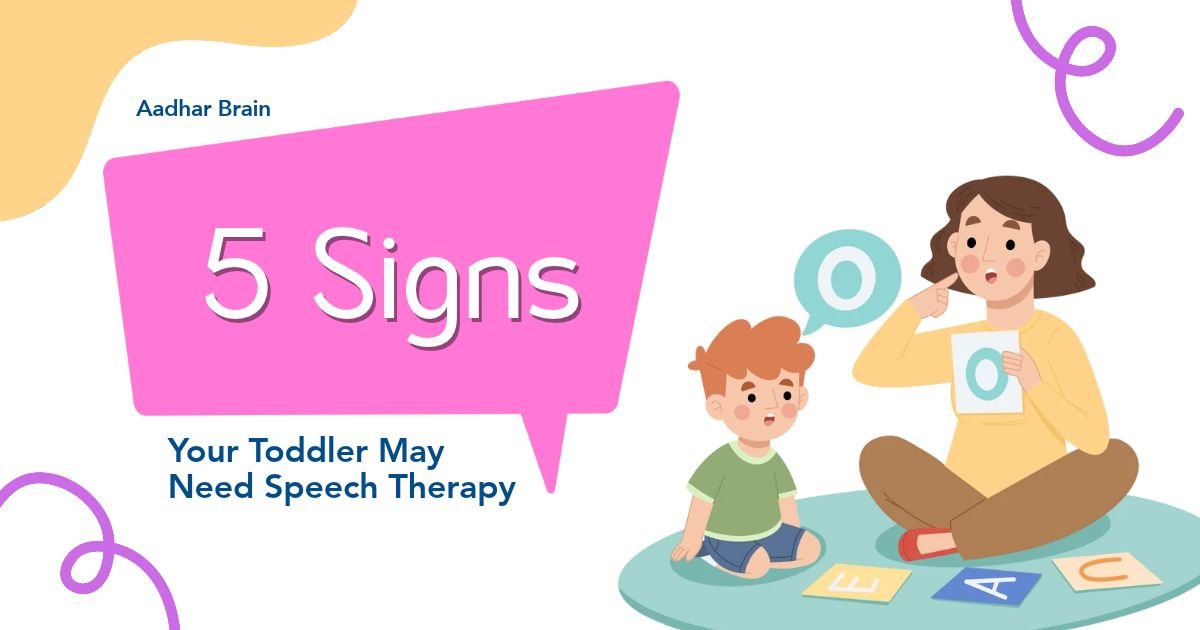
A toddler may need a speech assessment if they are not trying to say words by 18 months, are not joining two words by age 2, find simple directions hard to follow, use few gestures, or lose words they once used. One sign does not mean something is wrong. It does mean a conversation with a professional is worth having.
If you live in Agra, you may have heard “he will talk when he is ready.” Some children do catch up on their own. Others benefit from early support, and an assessment is the only way to know which group your child belongs to. This guide explains what is typical, which signs matter most, and what to do next.
Quick summary: Watch for few or no words at 18 months, no word combinations at 2, trouble following simple directions, limited gestures and back-and-forth, or any loss of skills. These are reasons to ask, not a diagnosis. Early questions to a paediatrician or speech therapist are never wasted.
What Is Speech Therapy for Toddlers?
Speech therapy for toddlers is a form of support delivered by a speech-language professional that helps young children develop understanding of language, spoken words, speech sounds, and early social communication. It usually begins with an assessment and uses play-based activities, with parents learning strategies to practise at home.
What Is Typical at Each Age?
Every child develops at their own pace, and babies born early may reach milestones later. Milestones are a guide, not a test. The CDC updated its checklists in 2022, and these language milestones are a useful reference:
| Age | What most children do |
|---|---|
| 18 months | Try to say three or more words besides “mama” or “dada”; point to show you something interesting |
| 24 months | Say at least two words together, like “more milk”; point to two body parts when asked |
| 30 months | Say about 50 words; join two or more words with an action word, like “doggie run”; use words like “I,” “me,” and “we”; follow two-step instructions |
| 36 months | Hold a conversation with at least two back-and-forth exchanges; say what action is happening in a picture; say their first name when asked |
A milestone checklist cannot diagnose anything. It simply shows what most children do by a certain age.
5 Signs Your Toddler May Need Speech Therapy
1. Few or no words by 18 months
By 18 months, most children try to say three or more words besides “mama” or “dada.” Baby versions count, such as “ba” for ball. If your child mostly babbles, points, or cries to ask for things and is not attempting words, mention it to your paediatrician.
2. Not joining words by age 2
Around 24 months, children begin combining words. If your child has a handful of single words but no combinations, or is still far from about 50 words around 30 months, an assessment is worthwhile. Benchmarks vary slightly between organisations, and some professional bodies, including ASHA, take a stricter view of vocabulary around age 2. That is why a professional opinion is more reliable than any single number.
3. Difficulty understanding or following simple directions
Understanding develops before speaking. By 15 months, children follow directions that combine a gesture and words. By 30 months, they follow two-step instructions like “put the toy down and close the door.” Watch for a toddler who rarely responds to “give me the ball” or “come here” unless you also point or show. It is also sensible to ask your doctor about a hearing check, because hearing affects how children learn words.
4. Few gestures and little back-and-forth
Communication is more than words. Around 18 months, children typically point to show you something interesting. Pointing, waving, showing toys, and taking turns in sound games all count. If your toddler rarely does these things, a speech therapist can look at the whole picture of communication. This is not a diagnosis of any condition, and your paediatrician can advise whether a wider developmental review would help.
5. Losing words or skills they once had
This sign matters at any age. If a child had skills and has lost them, the CDC’s advice is to tell the doctor and act early. Please do not wait and see. Book a medical review promptly.
Other things worth mentioning to your doctor: frequent ear infections, early birth, a family history of speech or language delay, and difficulty with feeding or chewing.
Late Talker or Speech Delay?
Some toddlers are called late talkers. They say few words between 18 and 30 months but understand well, interact socially, and play appropriately. Many of these children catch up. Others do not, and you cannot tell the difference by looking.
Waiting becomes less sensible when a child also struggles to understand, uses few gestures, or rarely imitates words. An assessment replaces guessing with an answer. It also gives you something practical to do while you wait for progress.
When Should You Act Sooner?
Ask for an assessment promptly if any of these apply:
- Your child has lost words or skills they used to have.
- Your child does not seem to respond to sounds or to their name.
- Your child is not using any gestures by 18 months.
- You have a strong feeling that something is different. Your observations count.
How Does a Speech Therapist Help?
The first step is an assessment of how your child understands and uses language. At Aadhar Brain, speech therapy in Agra begins with a comprehensive speech and language assessment, followed by a personalised programme, parent guidance with home activities, and regular progress reviews. Progress differs from child to child, and no therapy can promise a specific result.
Therapy for toddlers is play-based. A session may look like games with toys, books, songs, and routines, with you learning how to use the same ideas at home.
If your child’s needs go beyond speech, our team can discuss whether other support, such as social skills training or occupational therapy, is relevant. Not every child needs every service.
How Can You Encourage Talking at Home?
These steps support a therapist’s work. They do not replace an assessment.
- Talk about what you are doing. Narrate meals, baths, and walks in simple words.
- Pause and wait. After asking a question, give your child several seconds to respond.
- Expand what they say. If they say “ball,” reply “big red ball.”
- Read and sing daily. Use whichever language or languages you speak at home.
- Play face to face. Peekaboo, bubbles, and turn-taking games build the rhythm of conversation.
- Keep screens from replacing conversation. Real talk, with a person responding, teaches the most.
How to Choose a Speech Therapy Service in Agra
Ask three simple questions:
- Does the centre assess my child before planning therapy?
- Will I be shown activities to use at home?
- How often will progress be reviewed with me?
Good answers show a plan built around your child, not a standard package. You can read about our approach on the About Us page.
Key Takeaways
- Most children try three or more words by 18 months and join two words by 24 months.
- The five signs are few words at 18 months, no word combinations at 2, trouble following directions, limited gestures and back-and-forth, and loss of skills.
- A late talker may catch up, but only an assessment can tell.
- Checklists guide you. They never diagnose.
- Home routines help, and they work best alongside professional advice when you have concerns.
Frequently Asked Questions
At what age should a toddler see a speech therapist?
How many words should a 2-year-old say?
My toddler understands everything but does not talk. Should I worry?
Does speaking more than one language cause speech delay?
Is a speech delay the same as autism?
What happens at a first speech therapy assessment?
How long will my toddler need therapy?
How can I help my toddler talk at home?
Should I check my toddler's hearing first?
If you are reading this because something about your toddler’s speech is on your mind, you have already done the hardest part: noticing. You do not need to be certain before you ask. To talk through your questions, contact Aadhar Brain Creativity & Development Centre to learn about speech therapy and child development support in Agra.